





JAN
21
2026
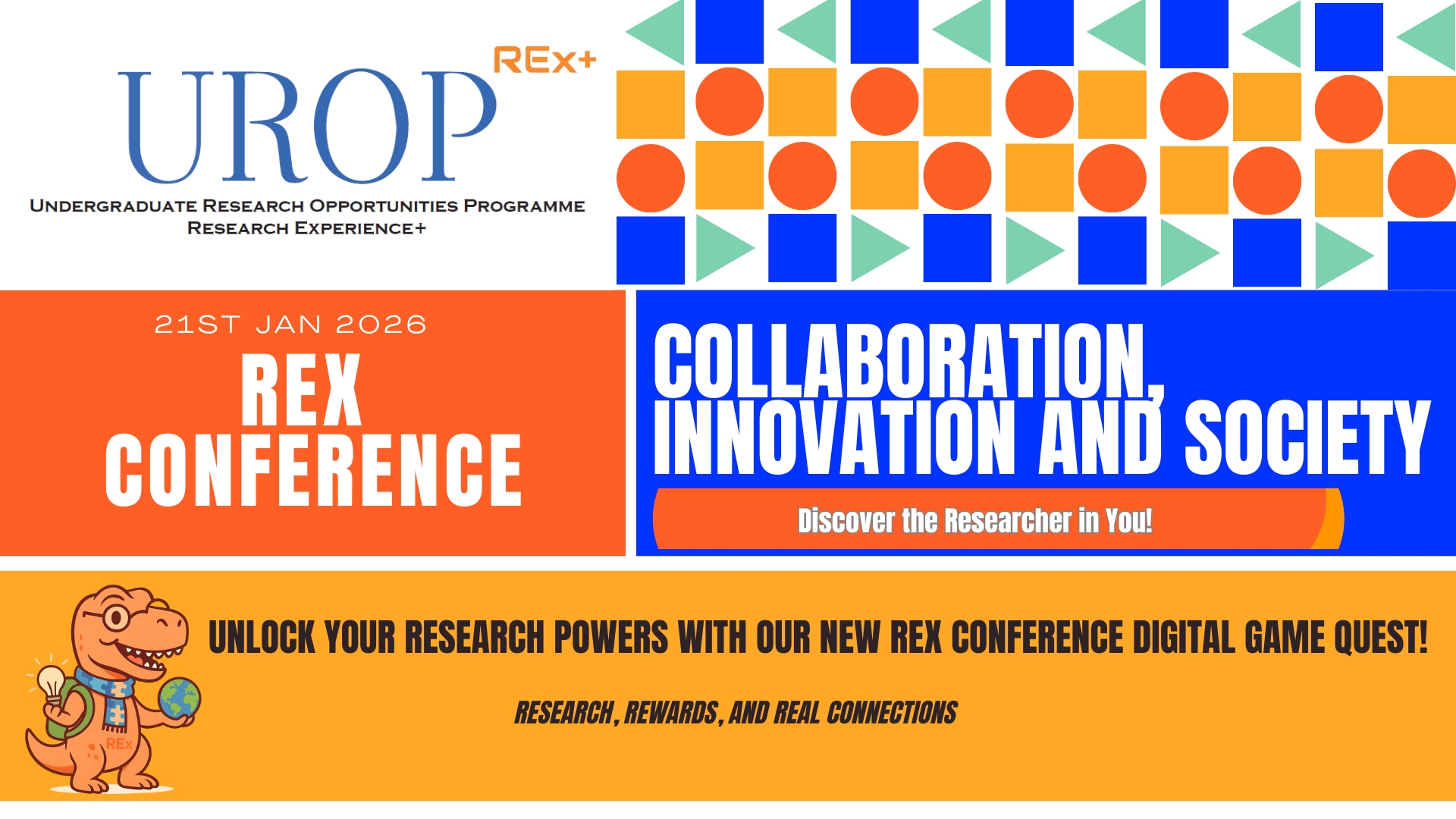
REx Conference 2026

Total Registrations: 330

Description

[This event is open to NUS Undergraduate Students, NUS Graduate Students and NUS Staff]
Where Research Meets Play: A Gamified Learning Experience
The REx Conference brings together curious minds, bold ideas, and real-world impact. Previously known as UREC, we have rebranded to better reflect our mission: to explore, experiment, and expand the boundaries of undergraduate research through collaboration, innovation, and community.
This time, we are excited to share the introduction of a brand new look to our conference and that is our REx Conference 2026 Digital Game Quest! Yes that's right, stand a chance to win attractive prizes by participating in our conference game, where registered attendees (both NUS staff and students) can redeem points as they attend the various segments of our conference programme- this includes more than 50 amazing student presentations, an engaging fireside chat with library fellows, inspiring talks by our esteemed keynote speaker and graduate students and three exciting interactive booth dealing with Virtual Reality, Detective Case Solving and Intriguing Science Experiments! Everyone in the NUS community are welcome to register for this fruitful event. Sign up early to earn bonus points and gain an edge in the conference game quest as you attend this meaningful research showcase.


Date and Time

Wednesday, 21st January 2026 10:00AM GMT+08:00

to

Wednesday, 21st January 2026 6:00PM GMT+08:00

Organisation

Office of the Senior Deputy President and Provost

Contact Email

pvobox66@nus.edu.sg

Our Event Speakers

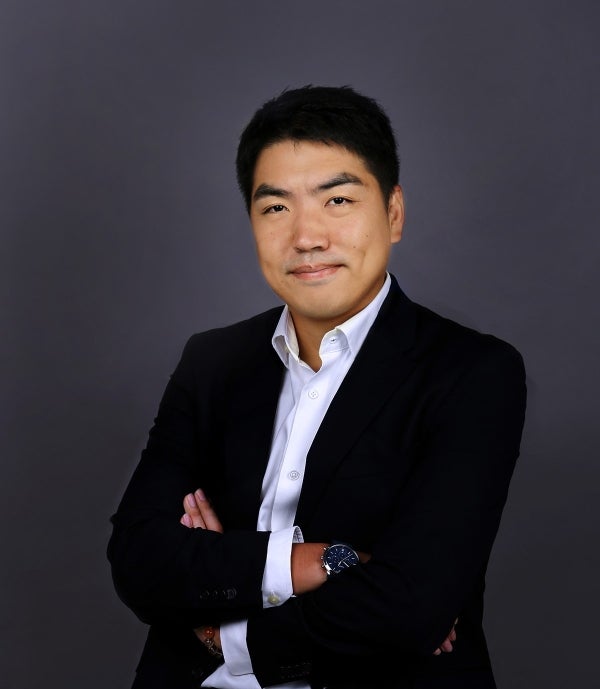
Chao Yuan

Keynote Speaker, Climate Modeling and Analytics for Urban Heat Risks Mitigation and Adaptation

Professor Chao Yuan is a tenured Associate Professor in the Department of Architecture at the National University of Singapore (NUS), where he leads the Urban Climate Design Lab as Principal Investigator. His work bridges climate science, urban design, and sustainability, and has earned him several prestigious honors, including the Presidential Young Professorship at NUS, the NRF Investigatorship from Singapore’s National Research Foundation, and the 2025 Timothy Oke Award from the International Association for Urban Climate, in recognition of his cross-disciplinary leadership in urban climate science and design. Prof. Yuan’s research focuses on advancing climate-sensitive strategies for high-density tropical cities, with core expertise in urban wind environments, air pollution, anthropogenic heat, passive cooling technologies, and urban greenery. He leads interdisciplinary initiatives that integrate science, technology, and design to tackle complex urban sustainability and resilience challenges. His work is highly collaborative, involving international partners such as the Chinese University of Hong Kong, Massachusetts Institute of Technology, ETH Zurich, and the University of Cambridge, with whom he co-develops cutting-edge research on urban climate adaptation and future cities.
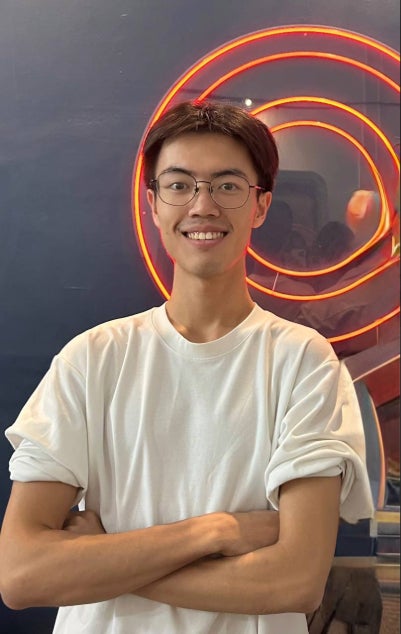

Wei Zhi

Guest Speaker, Fireside Chat with UG Research Library Fellows

Wei Zhi's research project provides a detailed exploration of the evolution of banking in Singapore from the pivotal year of 1945 to 2025, meticulously tracing the significant and strategic transformations that laid the nation's foundation as a financial powerhouse. Beginning in the immediate post-war period, the analysis examines the enduring influence of British colonial banking systems on Singapore's economic recovery and the crucial early development of indigenous local banks. Following independence in 1965, Singapore decisively embarked on extensive financial reforms, most notably establishing the Monetary Authority of Singapore (MAS) in 1971 as the sole central regulator. This resilient growth of local banks allowed the sector to successfully weather several major financial crises throughout the late 20th century, simultaneously driving their ambitious expansion into competitive regional and global markets. In the contemporary era, the rapid rise of digital banking and fintech innovation has unequivocally propelled the city-state's banking industry to the unprecedented forefront of global finance. This project ultimately provides a deeper and nuanced understanding of Singapore’s banking history, highlighting its enduring stability and emphasising its increasing relevance in today’s complex and interconnected global economic landscape.

Isabelle Singarayar

Guest Speaker, Fireside Chat with UG Research Library Fellows

Isabelle's research looks at the themes of race and coloniality. As a previous British colony, Singapore has a high percentage of Christians at 18.9% (Singapore-United States Department of State, 2020). As such, there is a distinct Christian community in Singapore. Moreover, many scholars suggest that this Christian community enjoys a distinct culture of privilege in the country, often correlated to class privilege, where the ‘Christian community now tends to be over-represented amongst the middle and upper middle classes (Woods and Kong, 2022). Coloniality is importantly baked into the privilege of Christians, particularly through the notions of ‘English-speaking’ Christians as being wealthier (Woods and Kong, 2022). Furthermore, there is perhaps another key fault line that emerges in connection to the Christian community in Singapore—race, especially with an extremely high percentage, 95.1%, of Christians being Chinese (Chong and Yew, 2013). Notably, 12.6% of ethnic Indians in Singapore are also Christian (Singapore-United States Department of State, 2020). With these fault lines that emerge, so does a racial distinction that splits Chinese and Indian-Christians from Malay-Muslims (90% of the Malay population). Her project thus aims to fill gaps in the current literature on Christian privilege by focusing on race and coloniality.

Ng Rui Kyi

Guest Speaker, Fireside Chat with UG Research Library Fellows

Rui Kyi is a fourth-year medical student with an interest in the inter-disciplinary understanding of public health and geography in influencing health outcomes. She hopes to contribute to new and practical solutions that improve healthcare systems, especially in communities that face barriers to access. Her current research explores the access to maternal healthcare services in rural areas of Southeast Asia. Though healthcare in the region has improved over the years, many women living in rural communities still struggle to receive proper care during pregnancy and childbirth. Common challenges include long distances to healthcare facilities, financial difficulties, cultural beliefs, and a lack of trained healthcare professionals. The systematic review aims to better understand these barriers and also highlight factors that may help improve access, influencing stakeholders in developing more effective and sustainable solutions to improve maternal health in underserved areas.

Cheah Chong Joon Brandon

Guest Speaker, Fireside Chat with UG Research Library Fellows

Brandon Cheah is a second-year undergraduate researcher in Pharmaceutical Science at the National University of Singapore (NUS), working on diagnostic approaches in dengue under Asst. Prof. Chee Wah Tan. His research interests span infectious disease pathogenesis, immunology, and the pedagogical applications of artificial intelligence in medical and healthcare education. He has published in Viruses and Medical Teacher and is a co-author of ongoing works under review on LLM-supported misconception-based learning and analogy-based instruction in healthcare education. His recent presentations include talks at the NUS Undergraduate Research Library Fellowship Symposium and the FEBS-IUBMB-ENABLE Conference in AI for Biomedicine. Beyond research, he is active in music as a performer and music director in both classical and jazz piano. He is passionate about music theory and analysis, particularly Schenkerian analysis. He believes in the joy of learning, and that true learning transcends disciplinary boundaries.

Lo Zhu Ern Jonah

Guest Speaker, Fireside Chat with UG Research Library Fellows

An Honours-Year History Student, Jonah enjoys studying the Cold War and Post-Cold War to uncover the scheming, mysterious, and strange. As a NUSL Undergraduate Research Fellow, he previously used Singapore periodicals and newspapers to explore how anti-Westernism and anti-Westernisation were constructed, performed, and exploited in 1990s Singapore. Since then, he has moved on to using government archives to investigate the security politics and defence relations of Indonesia and Thailand. He is currently working on an undergraduate thesis on British defence sales to Indonesia. Jonah has published in the Cambridge Journal of Political Affairs, the Defense Horizon Journal, and the Strategy Bridge.

Bai Yun Peng

Guest Speaker, Heart-To-Heart-Research Talk: Real Research, Real Stories

Bai Yunpeng is a final-year PhD student at the School of Computing, National University of Singapore, advised by Prof. David Hsu, Prof. Shengdong Zhao, and Prof. Antti Oulasvirta. His research focuses on computationally rational models of human decision-making, particularly using reinforcement learning to simulate human behavior and visual attention control. His research aims to bridge a fundamental gap in AI and cognitive science: providing a computational foundation for unified models that simulate intelligent behavior through a closed loop of high-level cognition and low-level motor control. His work spans computational cognitive science, artificial intelligence, and human–computer interaction. He has published in venues including CHI, ETRA, CVPR, and ICCV. Prior to joining NUS, he worked on embedded, rule-based algorithms for wearable sensing devices. He previously earned his bachelor's degree in mechanical engineering, where he developed software for dynamic simulation and manufactured wheel robots.

Ong Shujian

Ong Shujian is a PhD candidate in Synthetic Biology at NUS SynCTI, supported by the President's Graduate Fellowship. His research focuses on developing novel phage-based directed evolution platforms with applications in carbon fixation and metabolic engineering. He recently completed a year-long research collaboration at the Max Planck Institute for Terrestrial Microbiology in Germany, supported by the Bayer Foundation Fellowship for Agricultural Science. Shujian's research journey has taken him across multiple disciplines. As an undergraduate, he explored cancer biology and mechanobiology across several A*STAR institutes and at ETH Zurich. This led to a pivot into food technology, where he co-founded Ants Innovate and worked on cellular agriculture and alternative proteins. Eventually finding his way to synthetic biology, he now focuses on engineering synthetic CO₂ fixation pathways. As an awardee of the NUS Outstanding Undergraduate Researcher Prize in 2020, his path illustrates how exploring different research areas and being open to pivoting can lead to unexpected opportunities and help identify one's true research interests.

Hui Min Annabeth Leow

Leow Hui Min Annabeth is a final-year PhD candidate in English Literature at the National University of Singapore, whose research interests lie in diaspora, transnationalism, race and ethnicity, and contemporary Asian American fiction. Her dissertation, which is supported by a President’s Graduate Fellowship and a Dean’s PhD Fellowship, examines the aesthetics and politics of disclaiming the nation in 21st-century Southeast Asian American millennial narratives. Her work has been published in ARIEL: A Review of International English Literature and Resources for American Literary Study, and has been presented at the Modern Language Association, American Literature Association, and American Comparative Literature Association conferences. Prior to joining NUS, she served as economics correspondent in the newsroom of The Business Times. She holds a Bachelor of Arts (Honours) in Comparative Studies in Race and Ethnicity with a minor in English, and a Master of Arts in Modern Thought and Literature, both from Stanford University.

Schedule

  • 21/01/2026 09:15
    Registration
  • 21/01/2026 09:50
    Event Commences
  • 21/01/2026 10:00
    Opening Remarks + Game Info
  • 21/01/2026 10:15
    Ignite Session
  • 21/01/2026 11:30
    Keynote Presentation
  • 21/01/2026 11:50
    Announcement on how to redeem gifts for games
  • 21/01/2026 12:00
    Lunch/Interactive Booths
  • 21/01/2026 13:00
    Oral Presentation Session
  • 21/01/2026 14:30
    Fireside Chat with Undergraduate Research Library Fellows
  • 21/01/2026 15:10
    Free Ice Cream Break!
  • 21/01/2026 15:30
    Poster Presentation
  • 21/01/2026 17:15
    Heart to Heart Research Talk with Graduate Students
  • 21/01/2026 17:50
    Prize Presentation and Closing Remarks